IoT-based smart irrigation protocol for water efficiency and soil moisture stabilization in lowland horticulture
DOI:
https://doi.org/10.59190/stc.v6i2.359Keywords:
Closed-Loop Control, Internet of Things, Smart Irrigation, Soil Moisture Sensor, Water Use EfficiencyAbstract
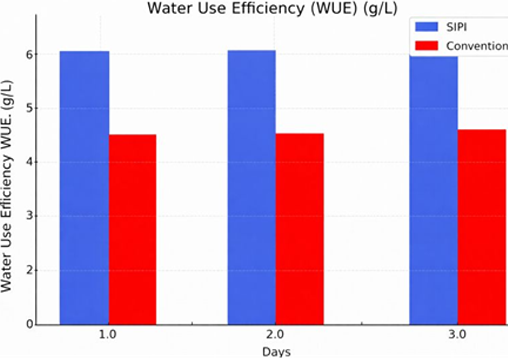
Conventional irrigation in horticultural land continues to face challenges related to water wastage and soil moisture instability, particularly in Indonesia's lowland regions. This study proposes a smart irrigation system based on the internet of things (IoT) with a closed-loop control mechanism to enhance water use efficiency and maintain optimal soil moisture. The system was designed using NodeMCU ESP8266, soil moisture sensor, DHT11 sensor, 12V water pump, and Blynk platform for remote monitoring. Sensor calibration was performed using gravimetric method and linear regression, yielding a conversion equation of Y = 78.00 - 0.8391X with a correlation coefficient of r = -0.965. Experimental testing over three days was conducted on bird's eye chili, corn, and water spinach plants, comparing the IoT system against manual irrigation. Results demonstrated that the system maintained average soil moisture of 55.23% compared to 43.53% in conventional methods, saved up to 25.9% water, and increased Water Use Efficiency by 62.7%. These findings indicate that the IoT irrigation system is effective, economical, and has potential to support sustainable precision agriculture.
Downloads
Published
How to Cite
Issue
Section
License
Copyright (c) 2026 Adeela Nurul Hadi, Azka Zhillan Zhalila, Raihana Salsabila, Kenny Indah Lestari

This work is licensed under a Creative Commons Attribution 4.0 International License.