Adsorption of lead (II) ions using NaOH-activated matoa fruit shell (Pometia pinnata): Characterization and adsorption kinetics
DOI:
https://doi.org/10.59190/stc.v6i3.382Keywords:
Adsorption Kinetics, Biosorbent, Lead (II) Ions, Matoa Fruit Shell, NaOH activationAbstract
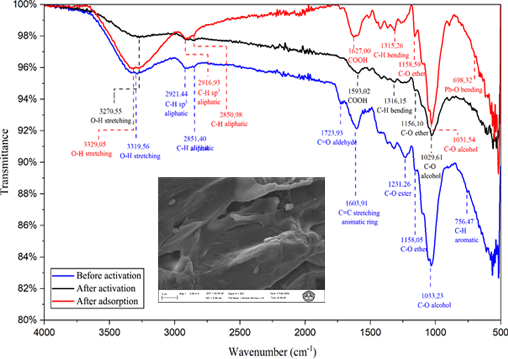
This study focuses on the utilization of matoa fruit shell waste, which contains cellulose, as a potential biosorbent for binding heavy metals in solution. The study aims to examine the ability of matoa fruit shell powder (Pometia pinnata) as a biosorbent in removing lead (II) ions from solution and to analyze adsorption characteristics through kinetic studies. The research methods included biosorbent activation using NaOH at activation ratios of 1:1, 1:2, 1:3, 1:4, and 1:5 (w/v). The adsorption process was conducted with variations in parameters, including biosorbent dose, pH, and contact time. Characterization was performed using FTIR to determine functional groups, SEM-EDS to examine surface morphology and elemental composition, and ICP-OES to determine lead concentration in the solution. Kinetic analysis employed first-order pseudo-kinetic, second-order pseudo-kinetic, and intraparticle diffusion models. FTIR analysis results indicated the involvement of hydroxyl (-OH) and carboxyl (-COO-) groups in the lead (II) ion binding process. The results of the study indicate that optimal adsorption conditions were achieved at a dose of 0.05 grams, a pH of 6, and a contact time of 60 minutes, with an adsorption efficiency of 90.76% and an adsorption capacity of 27.59 mg/g. The most suitable kinetic model was the pseudo-second-order model (R2 = 0.9999), indicating a chemisorption mechanism.
Downloads
Published
How to Cite
Issue
Section
License
Copyright (c) 2026 Fadhil Maulana Harahap, T Abu Hanifah, Sofia Anita

This work is licensed under a Creative Commons Attribution 4.0 International License.