Parametric optimization of an axial wind turbine blade for a hybrid renewable energy system integrating solar PV and micro-hydro
DOI:
https://doi.org/10.59190/stc.v6i3.395Keywords:
Axial Wind Turbine, Blade Optimization, Hybrid Renewable Energy, Micro-Hydro, Solar PVAbstract
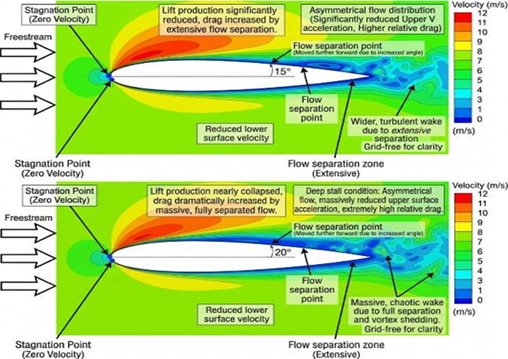
The growing demand for sustainable energy has driven the development of hybrid renewable energy systems that combine multiple sources to enhance reliability and efficiency. Solar photovoltaic (PV) and micro-hydro power are two widely adopted renewable sources, yet their performance is often limited by intermittency and seasonal variability. This research focuses on optimizing an axial wind turbine blade designed to harness wind energy from moving vehicles as a supplementary power source for a hybrid PV-micro-hydro system. The primary objective is to perform parametric optimization of the turbine blade to determine the optimal angle of attack that yields the highest lift-to-drag ratio, thereby maximizing aerodynamic efficiency. A computational fluid dynamics (CFD) approach using the FLUENT package was employed to simulate blade performance at various angles of attack (0°, 5°, 10°, 15°, and 20°), while maintaining constant wind speed, air pressure, and other parameters. The blade design features a diameter of 0.35 m, six blades, and a linear taper form, with testing conducted at a wind speed of 22 m/s, equivalent to the average speed of a moving truck on a highway. The simulation results demonstrate that an angle of attack of 10° produces the highest lift-to-drag ratio, indicating superior aerodynamic performance compared to other tested angles. Contours of velocity magnitude further confirm that the 10° angle yields the most favorable airflow distribution across the blade surface. The optimized blade design is now validated for integration as a supplementary wind energy component in a hybrid PV-micro-hydro system, contributing to increased overall energy output and improved system reliability. This research successfully achieves its parametric optimization goals, and the resulting blade design is ready for prototype assembly and further field testing.
Downloads
Published
How to Cite
Issue
Section
License
Copyright (c) 2026 Rufinus Nainggolan, Idham Kamil, Aprima A Matondang, Nobert Sitorus, Suadi Suadi, Baringin Sibarani, Soni Hestukoro

This work is licensed under a Creative Commons Attribution 4.0 International License.