Utilizing catfish waste-derived liquid organic fertilizers for sustainable microalgae cultivation
DOI:
https://doi.org/10.59190/stc.v6i3.417Keywords:
Azolla, Peatlands, Peat Water, Siamese Catfish, Water QualityAbstract
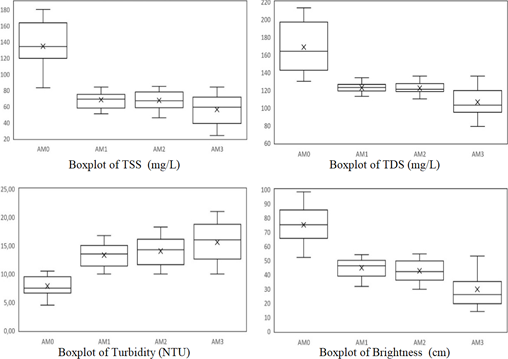
Peatlands are important ecosystems in Sumatra and Kalimantan in Indonesia that support the livelihoods of local people especially fisheries. The study investigated the effect of the addition of A. microphylla on water quality parameters in the rearing media of Siamese catfish in peat water to identify the optimal rate of A. microphylla that can enhance water quality and ultimately improve the growth and survival of Siamese catfish in aquaculture systems. The research was a randomized design with 4 treatment levels of A. microphylla with 3 replications, namely AM0 (Control), AM1 (20 g/m2), AM2 (40 g/m2), and AM3 (60 g/m2). The results showed that the best treatment was the AM3. It was able to reduce TSS by 68.5%, TDS by 37.65%, turbidity of 70.5%, and the brightness by 15.58 cm. The treatment improved the pH value of water (4.70 to 6.63), increased the dissolved oxygen content of water (3.30 mg/L to 7.66 mg/L), decreased water-free carbon dioxide (8.00 mg/L to 7.00 mg/L), increased nitrate content in water (0.43 ppm to 16.86 ppm), increased water orthophosphate content (0.64 ppm to 3.52 ppm) and produced an average abundance of plankton of 8461 ind. per L. The favourable condition was able to support the rearing of catfish for 60 days by increasing weight gain (2.39 g per fish), absolute length (2.50 cm per fish), feed efficiency (88.01%) and a high survival rate (93%). The results contribute to the development of efficient and eco-friendly aquaculture practices for fish.
Downloads
Published
How to Cite
Issue
Section
License
Copyright (c) 2026 Saberina Hasibuan, Yustina Yustina, Resma Wahyuni, Rodesia Mustika Roza

This work is licensed under a Creative Commons Attribution 4.0 International License.