Antibacterial activity of a fraction of Senna alata L. leaves against Staphylococcus aureus: A comparative study of solvent types and concentrations
DOI:
https://doi.org/10.59190/stc.v6i3.379Keywords:
Alcohol Fraction, Antibacterial, Phytochemicals, Senna alata L. Leaf, Water fractionAbstract
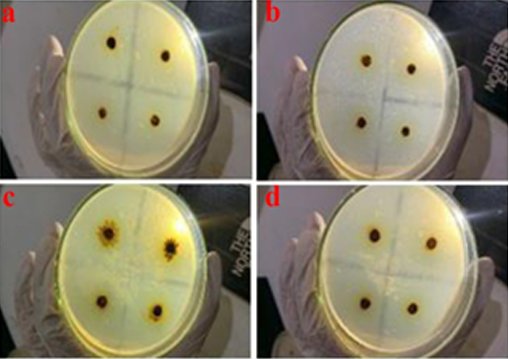
Skin infections occur when microorganisms enter the bloodstream, spread to other organs, multiply, and cause severe illness. One of the common causative agents is Staphylococcus aureus. Thank to their phytochemical content, the Senna alata L. leaf have been used traditionally for antibacterial properties. Herein, we report the utilize of Senna alata L. leaf extract as an antibacterial agent against the Staphylococcus aureus grow up using a two-solvent fractionation method i.e. water and 96% alcohol at concentrations of 40%, 50%, 60%, and 70%. The phytochemical screening and disc diffusion tests were adopted to determine the phytochemical compounds and antibacterial efficacy of the fraction, respectively. Further, the statistical analysis including normality and homogeneity tests followed by a two-way ANOVA to evaluate the effects of solvent and concentration. The phytochemical screening detected the presence of alkaloids, flavonoids, tannins, and saponins in both fractions. The antibacterial efficacy results shows that the water and alcohol fractinations at a concentration of 70% produced the greatest antibacterial effect, with an inhibition zone diameter of 18 ± 0.18 mm and 18.90 ± 0.32 mm, respectively. A two-way ANOVA revealed a significant interaction (p = 0) between solvent type and concentration, indicating that antibacterial potency depends on both factors. These results confirm that the Senna alata L. leaf extract has a good potential for use as an antimicrobial agent.
Downloads
Published
How to Cite
Issue
Section
License
Copyright (c) 2026 Eldya Mossfika, Dwi Saputra, M Saka Abeiasa, Azuxetullatif Azuxetullatif

This work is licensed under a Creative Commons Attribution 4.0 International License.