Comparative analysis of feature selection methods for support vector machine-based sex classification using craniometric data
DOI:
https://doi.org/10.59190/stc.v7i1.419Keywords:
Craniometric Data, Feature Selection, Information Gain, Sex Classification, Support Vector MachineAbstract
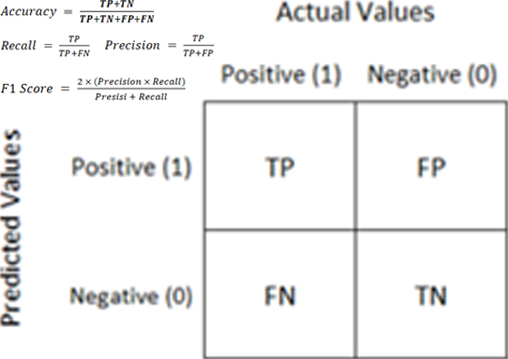
Sex classification is a fundamental stage in forensic anthropology that can be supported by machine learning to achieve objective biological profiling. To address the high dimensionality and inter-trait multicollinearity of craniometric measurements, this study introduces a comparative feature-optimization framework that evaluates two distinct filtering paradigms entropy-based information gain (IG) and redundancy-aware correlation-based feature selection (CFS) integrated with a support vector machine (SVM) classifier against a full-feature baseline model. Experiments were conducted using the William W. Howells craniometric dataset, comprising 2,524 human crania (1,368 males and 1,156 females) characterized by 82 osteometric predictor variables after removing administrative identifiers. Model performance on a 70:30 training-testing split was evaluated using accuracy, precision, recall, F1-score, and the Matthews correlation coefficient (MCC). Experimental results show that the baseline SVM using all 82 features achieved an accuracy of 81.10% and an F1-score of 0.8110. Integrating feature selection substantially improved classification performance while compressing data dimensionality. The IG–SVM model achieved the highest accuracy of 86.73% (F1-score = 0.8674, MCC = 0.7348) using 20 selected features (a 75.60% feature reduction). Meanwhile, the CFS–SVM model achieved a virtually identical accuracy of 86.69% (F1-score = 0.8670, MCC = 0.7335) while requiring only 10 features (an 87.80% feature reduction). Crucially, these findings demonstrate that eliminating 75.60% to 87.80% of the original craniometric features not only enhances SVM classification accuracy by more than 5.5 percentage points by removing noisy and collinear variables, but also substantially reduces osteometric measurement complexity. Consequently, the parsimonious 10-feature CFS–SVM configuration provides an efficient and interpretable framework for computer-assisted sex estimation in forensic anthropology.
Published
How to Cite
Issue
Section
License
Copyright (c) 2026 Iis Afrianty, Fitri Wulandari, Nabilla Alya Firana

This work is licensed under a Creative Commons Attribution 4.0 International License.