Electrocardiogram signal analysis using fast Fourier transform method for heart rate diagnosis
DOI:
https://doi.org/10.59190/stc.v7i1.319Keywords:
Electrocardiogram, Fast Fourier Transform, Heart Rate Diagnosis, MATLAB, PlotDigitizerAbstract
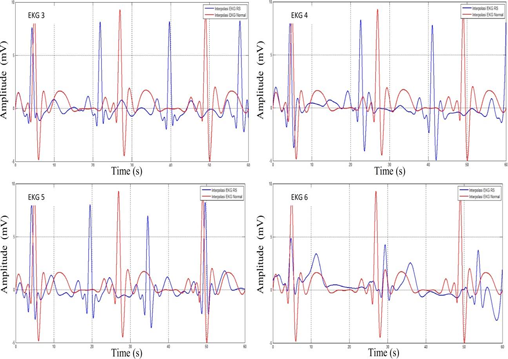
This study aims to analyze electrocardiogram (ECG) signals using the fast Fourier transform (FFT) method to support heart rate diagnosis. The data used consists of nine recordings of patient ECG signals obtained in graphic form, then converted into numerical data using PlotDigitizer software. Furthermore, the data was analyzed in the frequency domain using the FFT algorithm formulated through MATLAB software. The transformation results showed that the dominant frequency of each ECG signal ranged from 1.0332 Hz to 1.6172 Hz. A comparison between the FFT results and normal ECG signals was conducted to evaluate the suitability of the waveform and rhythm. Quantitative evaluation was conducted using the mean squared error (MSE) method to measure the level of difference between signals. The results confirm that the frequency-based method significantly contributes to more accurate measurements and greater efficiency in heart rate diagnostics. This method also supports the advancement of sophisticated techniques in biomedical signal processing.
Published
How to Cite
Issue
Section
License
Copyright (c) 2026 Dian Khairani Putri, Defrianto Defrianto, Zulkarnain Zulkarnain, Rakhmawati Farma

This work is licensed under a Creative Commons Attribution 4.0 International License.